SECOND CHANCES
christopher funderburg
Despite their reputations for excellence, some films and filmmakers just don't do it for Funderburg and Cribbs. This series, Second Chances, follows The Pink Smoke's attempts to find greatness where they've previously failed to see it; to actively make an effort to appreciate esteemed artworks for which they currently have a distaste (or simply feel indifference).
They'll give cult favorites like Texas Chainsaw Massacre 2 another shot and dig deep in the filmographies of beloved auteurs whose appeal baffles them (like Nicolas Ray) - with a little luck, maybe they'll end up as newly-minted fans...
SPECiAL "NOT VERY HALLOWEEN-iSH" HALLOWEEN EDiTiON
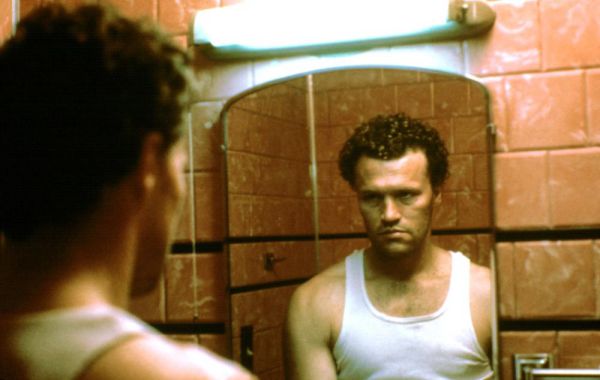
HENRY: PORTRAiT
OF A SERiAL KiLLER
john mcnaughton, 1986.
INITIAL RESISTANCE:
One extremely common path to cinephilia leads down a road paved with horror movies. Like many folks who later went on to be rarified enthusiasts of le cinema, my obsession with film found its footing on the most disreputable of genres, the one that frequently features screaming naked ladies meeting their end by pick, by axe, by chainsaw, bye-bye. It might seem counterintuitive that my love of Mike Leigh and Hollis Frampton has its roots in my youthful enthusiasm for Halloween and The Texas Chain Saw Massacre, but horror films by their nature end up being a pretty excellent gateway out of the world of mainstream cinema and into the world of movies that don't come to the Regal People's Plaza multiplex.
First off, if you're even somewhat of a completist by nature, there's obviously a lot to dig into with long-running horror film series like Friday the 13th, A Nightmare on Elm Street and The Texas Chain Saw Massacre - and they're movies every teenager in the United States is familiar with: you'd have to be some kind of a Mormon not to know the basic concepts of characters like Freddy and Jason. So, start with the popular, easily accessible favorites, dive right in and try to touch the bottom: what budding cinephile didn't spend an entire weekend burning through one or more of these series in marathons of total film emersion? It's a direct precursor to activities like spending all weekend at MoMA with Berlin Alexanderplatz or tackling Bela Tarr. The completism leads you through the other work of the filmmakers (Evil Dead into Army of Darkness into Darkman and maybe even Crimewave), into their influences (John Carpenter takes you from Halloween to They Live and Assault on Precinct 13 and then to the Westerns on which he's riffing like The Searchers and Rio Bravo) and then into the larger world of cult cinema.
The average teenager probably hasn't heard of Basket Case, but once you start poking around in the world of horror, your interest gets piqued about some titles that come up over and over again - then there's no going back once you experience Henenlotter. From there, it's into Euro-Art horror a la Dario Argento and Mario Bava, then on to extreme Asian cinema like Tetsuo and Audition then on to envelope-pushing Art-exploitation cinema like Man Bites Dog and before you know it you're at Funny Games, Michael Haneke, Catherine Breillat and no longer a horror fan but a real film fan, one with a palate that can appreciate not only the genuine brilliance of slasher masterpieces like Texas Chain Saw Massacre and Halloween, but legendary classics like Tod Browning's Freaks and Fritz Lang's M. Once you're into Lang and Haneke, the whole universe of cinema is open to you: you know the process for hunting down obscure movies, you have a basic sense of film history and (since horror filmmakers tend to be reverential fans themselves) you have a map of what else to seek out - folks like Joe Dante and John Carpenter are more than happy to point you in the direction of their influences and heroes (and even compelling curios.) Horror film fandom naturally births a more expansive film fandom. (That sounds like a Cronenberg movie: Tobe Hooper in a bathtub giving birth to Catherine Breillat.)
Director John McNaughton's debute feature, Henry: Portrait of a Serial Killer, is a landmark film in the horror genre and, as an important signpost on my travels to cinematic maturity, maybe I just expected too from it. It has a reputation of being the final word on the slasher subgenre, its notorious tagline outlining the stakes: "He's not Freddy. He's not Jason. He's real." Ostensibly based on real-life killer and inveterate yokel Henry Lee Lucas, McNaughton got the idea for his film after seeing a t.v. news magazine about the vicious rube - the film's twist was its basis in reality.
It was released in the fall of 1990, just before Silence of the Lambs came out in January 1991, and those twin meditations on the nature of serial murder more or less put the slasher subgenre out of its misery: Jason, Freddy and all had devolved into self-parody and the already thin form seemed to have totally lost its capacity for expressivity. Realistic films intended for thoughtful adult audiences (not just easily riled up teenagers on make-out dates), Henry and Silence pointedly laid bare the fact that slashers had become exactly the kind of mindless, puerile rot critics had accused them of being from the beginning. Silence, the thinking man's horror show, came with an unimpeachable pedigree and snatched up every Oscar in sight, while Henry's reputation centered on it being beyond the pale: a disturbing exploration of brutality and inhuman cruelty with no moral message to redeem it, an almost scientifically remote look at the nature of human evil.
It was a key film in the development and life of the horror genre and one of the clear bridges between horror and art cinema, existing as both an example of the genre and a commentary on it. It appealed to thrill-seekers looking for the worst of the worst, folks who went in for the Nekromantics and Cannibal Holocausts of the world, as well as intellectuals looking to explore the meaning not only of humanity's darkest real-life depravity, but of an audience's attraction and relationship to onscreen violence. This was a loaded film. Descriptions of its notorious home invasion scene made me unsure if it was something my 15 year-old self even wanted to see - this was a film that contained a strong contender for the most disturbing scene in film history. But I did my duty and saw it.
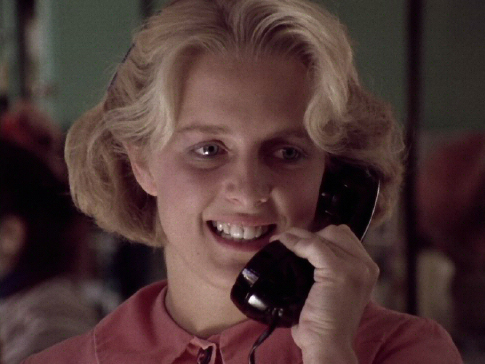
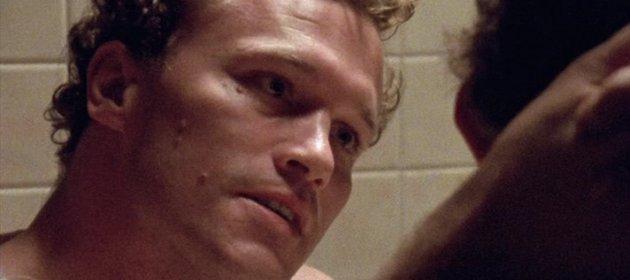
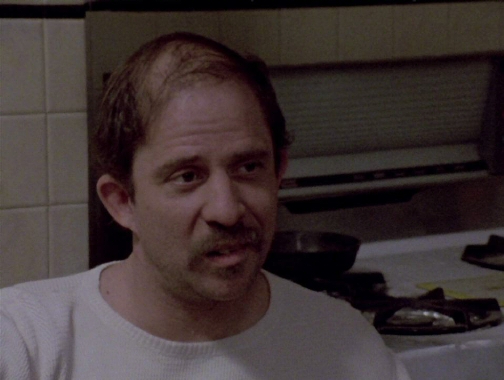
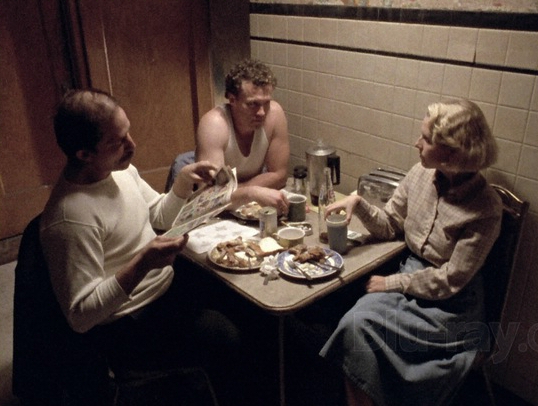
It didn't do much for me. The home invasion scene did indeed upset me (I think the fact that a teenage boy about my age stumbled in on his parents being murdered only to be quickly over-powered is what did it), but I found the rest of the film to be grey, bland and boring. There's very little onscreen violence, but unlike for example The Texas Chain Saw Massace or Halloween which also lack oodles of gore, there was no intensity or drive to the film. It's a lot of scenes of Michael Rooker as the titular psychopath sitting around in a crummy apartment drinking beer and chit-chatting inexpressively with Tom Towles and Tracy Arnold (as his best friend and his best friend's cousin, respectively.) I understood objectively that this was one of the "authentic" selling points of the film: a serial killer’s life is probably pretty drab, tedious and depressing, but that didn't make it any more interesting to watch. If anything, it reminded me of the "eat your vegetables" films about poor people in destitute, war-torn countries that were meant to be endured and "contemplated" more than enjoyed or even appreciated.
I'm embarrassed to admit it now, but it also really bugged me that Tracy Arnold isn't good-looking; I found it tough to engage her as a sexual object despite the fact that Towles and Rooker do so throughout the film and their sexual relationship to her more or less drives the story. I had an "ugh, don't make me think about these ugly losers fucking" reaction to the whole scenario. I suppose that’s a symptom of my overall reaction to the film: this isn’t as compelling or disturbing as I'd imagined it would be, it's mainly just unpleasant – but "wait in line at the DMV while hungover" unpleasant not "contemplate the void of existence" unpleasant.
Plus, I couldn't believe that the filmmakers took Henry Lee Lucas' confessions at face value. From an early age, I've been drawn to true crime books and I knew plenty about Lucas before I even heard about the movie – and Lucas was a colossal white trash liar who confessed to over 600 murders. His stories were the result of dual, interlocking agendas: Lucas wanted to play the big man after being caught and sentenced to death ("You think I'm evil? I'm the most evil man in the world!") and the police were eager to close out a bunch of cold cases and make themselves look good ("You will no doubt be impressed to hear that we solved all those old murders - it turns out it was this one dude.") Almost all of his confession was laughably easy to disprove despite the police initially touting their amazing accomplishment of being able to put to rest many seemingly unsolvable cases.
Henry works directly from Lucas' own version of his sinister self: he would commit roughly two murders a week, completely at random, with no methodology or pattern or even pre-planning, in places no one would expect him to be, a shadowy uber-criminal capable of committing all manner of atrocity and mayhem without ever tipping his hand. Lucas' supposed super-malevolence also gave the police an easy out: we couldn't solve those murders because this scheming madman is just. that. evil. Henry Lee Lucas was indeed a horrific psychopath who killed a lot of people, but the dispassionate ease and frequency with which his cinematic surrogate commits murders in Henry truthfully resembles Jason Voorhees far more than any real life killer.
So, my problem with Henry was a twofold failure for the film to live up to its reputation: I felt it was not particularly more realistic than Halloween and it certainly wasn't a better movie. I've long been a fan of director John McNaughton, but mainly for his delightful camp classic Wild Things, the best winking genre subversion ever to star Neve Campbell. I'm just assuming you all are cultured enough to be on board with that: go ahead and watch it again if you have your doubts. I'll wait right here. It's Bill Murray's most charming performance in the time period between Ghostbusters and Rushmore. However, McNaughton didn't exhibit much of a personality with Henry - it inarguably lacks the bravura filmmaking of Evil Dead, Halloween or the peerless and constantly aforementioned Texas Chain Saw Massacre. It even lacks the clever hooks and memorable intensity of something like Sleepaway Camp or Stuart Gordon's work.
On a purely stylistic level, it didn't rate above run of the mill slashers like The Burning or a Friday the 13th (parts 2 through 4). Like those films, it featured a lot of go-nowhere scenes of characters getting drunk and hanging out randomly punctuated by scenes of murder. In Henry, the only difference is that the ones doing the hanging out, drinking and fucking were middle-aged losers and not nubile teenagers. As a sexy, sexy nubile teenager myself when I first saw the film, it was hard to rate that difference as an upgrade. The realism that supposedly redeemed the tedium failed to materialize: in its own way, Henry was as sensationalistic and engineered for shock value as any third-rate stalk-and-kill cycle starring Linda Blair. It's undeniably a lurid, repulsive movie, one in which the camera lingers over grostesque corpses and the brooding score pounds away at the audience. The film intends to be a portrait of its audience's worst nightmares: a implaccable, opaque killing machine with seemingly no motivation, an emotionless robot who cuts and slices his way through unsuspecting, underserving victims for reasons that will forever remain obscure, inscrutable, inhuman. Just as Michael Meyer's body will no longer be there when Dr. Loomis looks out the window for it, Henry will get away at the end of the film, forever able to avoid detection and terrorize us, a creature lurking in the darkness, a monster without a mask. That's fine, I guess. It just doesn't match up with the film's reputation. I didn't think it was a bad movie, just one that failed at being interesting. Plus, I rented it the same day as Videodrome. So you lose, Henry. Go back to Chicago.

REASONS FOR RESCONSIDERATION:
The story of Henry's path from production to exhibition is a big part of its lore: McNaughton was originally hired by a pair of brothers (Malik and Ali Waleed) to direct a wrestling documentary, but that film fell apart and they decided to use the remaining funds to make a slasher film (it being 1986 and that's just what movie producers did with a hundred grand.) The resulting movie recieved the kiss of death from the MPAA: an X rating that couldn't be appealed or reduced no matter how much McNaughton altered the film. The censors simply found it to be too disturbing to ever recieve even an R rating. Saddled with the X rating, the filmmakers couldn't advertise the film in any major newspaper and several of the largest video store chains would refuse to carry it in stock. Also, the Waleed bros. apparently thought it wasn't very good, so they were in no hurry to rally to its cause. Roger Ebert saw it at the Telluride Film Festival in 1989 and immediately got behind it: his 3 and half star review called it "a low budget tour de force" and his prominence as a film critic essentially jolted it into the mainstream and out the circuit of film festival and midnight madness screenings through which it had been drifting for a few years.
The part of that story that generally gets left out interests me the most: the guest curator of the Telluride Film Festival in 1989 was none other than Errol "the greatest of all time" Morris. Morris had seen Henry at a midnight screening and personally selected it for the 1989 Telluride program. He insisted that Ebert make time for it - and Ebert's professed favorite film being Morris' Gates of Heaven, the portly taste-maker toddled out of his comfort zone and took a seriously violent movie seriously (instead of suspecting its makers and audience of the worst, like he did with I Spit on Your Grave * and Blue Velvet.) Morris' recommendation is clearly the missing link in Henry's jump from cult curio to cult classic - and I'm with Ebert on this one: when Errol Morris tells me something, I listen carefully and take his suggestions. Such careful listening and suggestion taking is, after all, how I came to see the description and sanity defying documentary freakout The Emperor's Naked Army Marches On.
The Morris connection is particularly interesting in light of Morris' relationship to serial murder: his doctoral thesis focused on the subject, his work revolving around a series of interviews with notorious killers like Edmund Kemper (a massive 6'7" beast of a man whom prison officials feared would kill Morris as he longed for death and committing a fresh, new homcide while in prison was the only channel by which he could be sentenced to capital punishment) and Ed Gein (the extremely loose inspiration for both Psycho and The Texas Chain Saw Massacre.) Morris's relationship with Gein ultimately led him to filmmaking - his trip to Wisconsin to meet the man himself and see the sites of Gein's crimes united him with his future mentor/antagonist Werner Herzog. Morris would later claim that Herzog "stole" the desolate Wisconsin landscapes from him for use in Stroszek, but their trip to the great plains state first acted as the catalyst for Morris transitioning from incorrigible failed graduate student to legendary filmmaker - shortly after their trip, Herzog even hooked Morris up with crew and equipment for Morris' debut film Gates of Heaven, although Morris fired the cinematographer** recommended by Herzog after just one day of filmming.
At any rate, Morris' bona fides on the subject of serial killers are extremely legit and his enthusiasm for Henry made me question my dismissal of it. Morris absolutely gets the benefit of the doubt over my own tastes when it comes to both le cinema and le sexually stunted monsters who slaughter their own mothers (something Kemper, Gein and Lucas all had in common.) Being just a kid when I first saw it, I was totally unaware of any of the fascinating backstory (and probably unaware of Morris, although The Thin Blue Line has been a touchstone film for me from as long as I can remember caring about movies.) I was curious how all of this nonsense flavored the film - even if it didn't redeem what was on screen, it probably made viewing Henry a richer experience.
I should throw in here somewhere that I've slowly become a Michael Rooker superfan. I think it was Slither that clinched it. Additionally, I'm a big fan of Fantomas' take on Henry's brooding, insistent score. Those were factors. How big were these factors in my decision to give them film another chance? I don't know. Why would you even expect me to be able to qunatify something like that? You're being unreasonable.
Anyhoo, there's also this: my wife and I watch a lot of horror movies. It's true. Without a doubt, it's her favorite genre and one of the interesting facets of her being from Colombia is that she never had access to giant swaths of American pop culture, so there's many many classic horror films she's never seen. I mentioned it while giving The Crying Game a second chance that she had never heard a single thing about that film or its infamous twist - and the over-hype around Neil Jordan's wang shocker failing to wend its way down to the equator really isn't the exception to the rule: lots of classics movies from our youth, from Silence of the Lambs to Leprechaun ("you're going to love it, my sweetness: it's about an evil leprechaun that wants to kill Jennifer Aniston!"), simply didn't even glancingly scrape the collective Colombian cultural consciousness. Sure, Freddy Krueger and Jason Voorhees made their mark, but Henry isn't Freddy, he isn't Jason, he's a bullshit amalgamation of a colossal white trash loser's most ridiculous lies!
Honestly, she enjoys serial killer and slasher movies, this one is a classic and who am I to judge? We've watched enough films on Netflix instant like Bikini Girls on Ice, Blood Games and R.O.T.: Reunion of Terror that I was beginning to suspect that Henry really deserved another look. In the context of crappy slasher films, it probably was a masterpiece of sorts and I should really give it its due, right? At very least, I should compare it to Visiting Hours, a really effective little slasher starring Michael Ironside that I only watched for the first time in January. If I thought of something like that as "good," shouldn't I really be mentally filing Henry in the same category? Aside from the notorious home invasion, I could remember very little about the film - who knows, maybe it would be more to my sensibility now? Surely, I'm willing to give Errol Morris the benefit of the doubt. And Maritza had never heard of it, so it'd be worth putting it in front of her - enough people think of it as a classic that it might earn her highest praise: "Good choice."
THE FILM ITSELF:
Strangely, after watching it a second time, my reaction to Henry was exactly the same but it totally reserved my opinion. What I mean is that I still don't think it's a great or even realistic movie, but I think it deserves its place in film history. At this age, with greater historical perspective on cinema, I better understand its impact and appreciate it as a work of art. This is a film that needs to be viewed almost entirely within its contexts, but it's ironically also a movie that has aged extremely well. Maybe that's not right: maybe it just hasn't aged as badly as most 80's horror films, so in retrospect the gap in stylistic quality between Henry and A Nightmare on Elm Street or Halloween isn't as pronounced as it seemed to my teenage self - when I was a kid, there was a notable difference between Henry's grimy amateurism and Nightmare on Elm Streets' studio slickness. Back then, Henry felt like a mess while those films felt like "real movies."
But Henry employs a mumbly, grim, shot-on-streets aesthetic that has prevailed, in particular in the world of art cinema, so McNaughton's film reads like something that could come out today, especially in an art-house - it plays like a genre-minded Dardenne bros. impression or any number of "shot on the street with non-actors!" films that I don't bother to commit to memory. It resembles (and exceeds in quality) the work of Andrew Bujalski and Joe Swanberg: imprecise framings, listless performances, location photography, an intentionally cultivated air of tedium and social awkwardness. Heck, there's an artsy, critically acclaimed Argentine serial killer movie called Tony Manero that re-uses Henry's every trick and tic.
Despite being filmed in 1986, there's zero trace of that famous cheesy veneer generally described as being "totally 80's." It's like the anti-Toxic Avenger. Styles haven't even really changed for blue collar stiffs, so the outfits and haircuts don't instantly date the movie - there's a timless quality to the lives of the perpetually broke and desperate. The milieu of the film - boarded up storefronts, scuzzy homeless drug addicts and empty gravel strewn lots - looks more or less the same no matter the year. I might be overstating the case a bit, but there's no denying that Henry doesn't feel as instantly attached to the date of its creation as the hoardes of slasher flicks that came out between Halloween's bombshell success and the genre's demise in the early 90's. Those films feel tied to that time period - there's no mistaking Happy Birthday to Me, The Prowler, My Bloody Valentine or Silent Night Deadly Night as anything other than products of 80's pop culture, a very pungent and distinctive flavor of pop culture, for sure. Jason has become one of the unmistakable mascots of the 1980's and the attendant nostalgia for the decade: Freddy and Jason and late period Michael Meyers are embodiments of the decade on some level. Henry and its hero feel more at home than ever in 2011, viewed during the economic meltdown that has left the working class of America drifting through a landscape of boarded up storefronts, nothing better to do but drink beer and half-heartedly search for work that they know they won't find.
Ironically (as I just mentioned, using the word correctly twice now, if redundantly), I think Henry is a film that needs to be viewed and understood almost entirely within its context. This is a mediocre movie that gains almost all of its potency when set against the backdrop of 80's horror film culture. By the time of Henry's production in 1986, the slahser genre should have been on its last legs. In 1978, John Carpenter's Halloween had set a template that could be repeated simply in infinite variations*** - and repeated it was, seemingly infinitely, in increasingly simplistic variations - most of the imitators having nothing on their plate but the basic idea: a masked killer stalks his teenaged victims and kills them in surprising ways. More than anything else, the video store boom of the mid-80's sustained the genre: the stores simply needed product, any product, to fill their shelves and the slashers could be made cheaply and easily, requiring almost no forethought and, as a popular genre, being almost certain to be distributed and turn a profit.
There were no reprecussions for turning out rotten, derivative crap; only rewards. The video stores happily stocking virtually anything regardless of quality and the ease with which slashers could be thrown together constitued a harmonic convergence that kept the genre stumbling forward even after it reached a point of creative exhaustion. Henry itself was a product of these confluences, a cheaply produced stalk-and-kill made because its producers had a small amount of cash to make a movie and no better ideas. I'm not sure McNaughton could have convinced the Waleed brothers to make any film but one like Henry with the money from their failed documentary - certainly, going that route constituted the path of least resistence. In 1986, in the world of cinema, there was no better money-making scheme than having a creep mutilate unsuspecting victims: Henry's simplest variation on the formula was for the killer to not wear a mask.
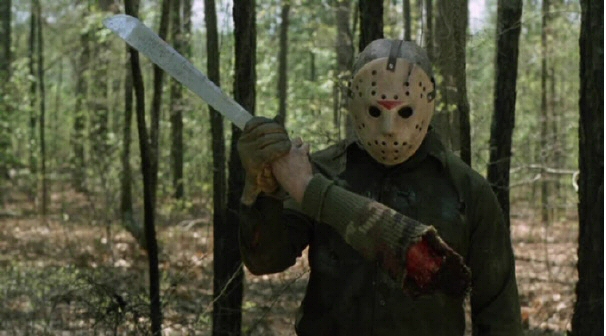
Another notable variation on formula in Henry was having the film's monstrous murderer be the protagonist - in 1986, this would have been somewhat fresh and original. But by the time of the film's release in 1990, the filmmakers stumbled into a default commentary on where the horror genre on the whole (not just slashers) had ended up. The years between the film's production and widespread distribution had seen the release of three more Friday the 13th films (including a goofy comedic variation on the story, another one in which Jason fights a teenage Carrie-esque psychic and one in which Manhattan's neon green sewer water melts the villain and reduces him to a sobbing little boy), three additional Nightmare on Elm Street movies (featuring the demon-infested dreams of a fetus, a dog pissing Freddy's bones back to life and a gaggle of kids simultaneously assualted by their one big fear and horrible, horrible puns), the birth of Halloween costume staple Pinhead (in Hellraiser and its first sequel) and numerous attempts to catch the wise-cracking catch-phrase magic of Freddy Kreuger in films like Wes Craven's Shocker. The originator of the form, Halloween, had nobly tried to try something new with 1982's Michael Meyers-free Halloween III: Season of the Witch... only to come scampering back to the fold with its tail between its legs for 1988's Part 4 and 1989's Part 5, which put the focus squarely back on the masked killer and attempted to build him a ridiculous mythology involving a shamanistic cult, psychic connections and a lineage of evil. The Texas Chainsaw Massacre series returned in 1986 and 1990, featuring pointedly campy variations on their initially truly disturbing killers and also couldn't resist building a moronic backstory that involved evil corporations and bionic legs.
Because these series are now coated in a glow of nostalgia that views their ridiculousness charitably, you have to understand just how freakin' retarded all of this seemed at the time, especially to horror fans. The later films in all of these series were despised upon their initial releases for being cheap cash-in's made by people who didn't understand anything about what made the original films beloved.** ** It stung even more that critics (and snooty folks in general) lumped the original classics in with the awful sequels, constantly implying that there was no difference between Halloween and Halloween 4, that Freddy Kreuger's pun-based evil in the sequels meant you were an idiot for finding value in Wes Craven's inventive original film. Arguing that The Texas Chain Saw Massacre was a more compelling, even brilliant, work of art because it was darker, more troubling and transgressive than the goofy sequels made you seem a like creep who got off on disquieting violence and drepravity. To put words in the mouths of moms and ratings boards across the world "The sequels are silly trash. If you like the more complex and upsetting originals, you must be sick."
When McNaughton filmed Henry in 1986, he probably couldn't foresee where the genre was headed in a few years - most likely, he was simply attempting to imitate the style and tone of the genre as it then existed: slashers in the mid-80's tended to be on the dull and drab side of things - the video store cash-in cruddiness inimical to films like, say, 1984's Splatter University meant that they generally lacked style or intensity (and almost definitely a guiding intelligence or philosophical point of view.) Mid-80's slashers are generally listless, dispiriting affairs - Henry's trick was to put the killer on the forefront, but it hardly upsets the apple-cart in terms of acceptable tone and pacing: "slow-moving, grey and randomly constructed" was the order of the day. The killings that punctuated these films' go-nowhere stories came without warning or even any particular narrative point and the films just as quickly settled back into filler scenes in which very little happened. One of the things that I enjoyed much more about Henry upon re-viewing it is how pointed and effective its scenes of "nothing" are in comparison to most slasher films. Its virtue is that it's concerned on a basic level with real life and McNaughton takes a lot of care with depicting the low-class, desperate, crushing existence of its protagonists.
I should mention that he had a giant fucking trump card in Michael Rooker. Rooker is undoubtedly the greatest actor associated with any iconic horror role (sorry, Mark Torgl) and his work in Henry takes the film to another level. There's subtlety to his depiction of evil, an amalgamation of jagged mental scars from a lifetime of unendurable hardship clashing with self-pity and self-deception. His rage has a source: an empty life with no meaningful future, a childhood of brutal physical and sexual abuse, a social system uninterested in handling the problem of Henry's existence.
But Rooker plays it so these legitimate sources of despair feel like cop-outs, a man lying to himself and the world, a ball of impotence and rage, a broken man unable to forge human connections, but all too happy to let his broken-ness overtake him, his rage and evil brimming with self-satisfaction and empty power. When this character, as embodied by Rooker, sits around drinking a beer, bullshitting with Tracy Arnold, their moments are loaded with meaning, every line of dialog coded with both real pain and callow self-deception. Arnold, playing an abused wife attempting to carve out a life for herself, provides the key to Rooker's character with their increasingly romantic relationship delineating just exactly how Henry is beyond hope. Listless scenes of people getting trashed regain their power and meaning in Henry, even if the film doesn't deviate too wildly from the prevalent template. But don't let me get too carried away: I'll speak more to this, but these scenes are still painfully slow and meandering. The scenes are meaningful, but Rooker aside, I wouldn't exactly call them good. I'm constantly tempted to cut McNaughton some slack: he's a filmmaker I admire greatly and scenes like that are really tough to make engaging - I'm impressed by how close he comes.
The mundanity of Henry makes for an interesting contrast, too: by 1990, Jason, Freddy, Pinhead, Michael Meyers and Leatherface had become the undisputed stars of their series and, as a result, the tone of the later films in their series is all out of whack. In the early films in each monster's respective series, you are clearly supposed to root against them, to cheer for Laurie Strode and Nancy Thompson if not to defeat the forces of darkness than to at least survive them. By the time Freddy is slicing and dicing a zonked out Breckin Meyer to the strains of "Inna-Gadda-Da-Vida" and looking directly at the camera to make goofy jokes, it's not entirely clear that he can really be considered the villain anymore. Sure, the films are still structured so that a hero takes on the beast and the idea is always that the audience is rooting for the hero to take down the baddie, but films like Halloween 4 and Friday the 13th Part 8 are without questions just going through the motions and the only pleasure to be had in them is in smirking at whatever outré ways the filmmakers can dream up to splatter out the guts of the victims. These films come awful close to being guilty of the most common (and bullshit) criticism of horror film in general: they're all designed for sickos to cheer on grosteque murder! Henry stands in stark relief to Freddy and Jason: there is zero chance for an audience to cheer for this psychopath or take pleasure in his violent actions. The film's generally downcast, unpleasant nature plays a big part here as well: this movie is no fun, whatsoever.
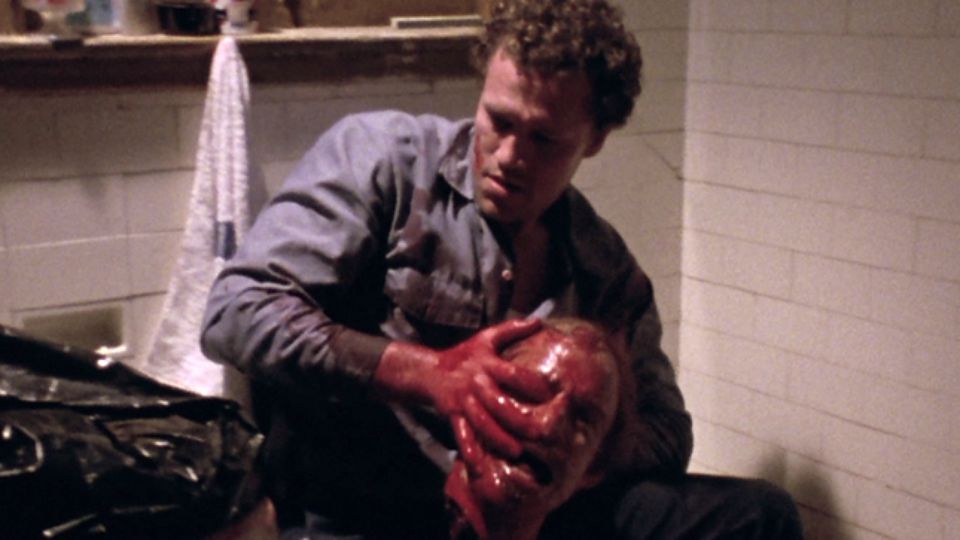
Undoubtedly, part of what appealed about it to critics and more sophisticated audiences in 1990 was the fact that this bleak portrait of a killer functioned as a de facto corrective to the defanged, cartoon versions of Freddy and Jason that amused audiences with their pun-and-machete-centric antics. There's simply no way to take pleasure in the compulsive, pointless depravity of Henry. On an intellectual level that's interesting. But it also turns the film into a bit of curio, something that plays to your curiosity rather reels you in as a work of art. The filmmaking and writing simply isn't up to the task of picking up the artistic slack: there are plenty of classic works of art that are bleak beyond belief, but they have other elements to engage the audience. Part of why Henry contrasts sharply with those other horror franchises is that it is less engaging. Rooker's performance aside, watching Henry drink beer and do nothing puntuacted by short bursts of tediously naturalistic violence failed to keep my attention half as well as the admittedly more ridiculous and far less defensible late-period slashers I've just been discussing. The film's infamous home invasion triple-homicide functions as a clever proto-Haneke critique of violence and viewership (we witness the whole scene through what is revealed to be a video playback of the events), but it's not a very good scene. It's just grim and dull. Intellectually, there's a lot to be said about it. As a film-going experience, it's mediocre - if hard to stomach.
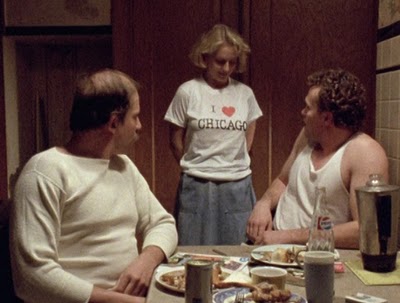
Another bit about context: as I mentioned, Michael Rooker is brilliant in the movie. Discovering him as an actor must have been exciting for audiences in 1990. Great actors are few and far between; genuinely brilliant actors lacking movie star looks headlining low budget slasher films are as rare as discoveries come. Even now, all the way out here in 2011 with a body of work to prepare me for it, I was still blown away by Rooker's performance in Henry. If I saw it on the festival circuit back in the 80's before its theatrical release, I imagine I would have told everybody to see it, not because it was a great film, but because Rooker is an unbelievable find and his work justifies seeking out the movie. Henry probably still represents Rooker's finest hour, the only film he dominates from start to stop, so maybe one should still seek it out for his performance alone - time really hasn't diminished his work. Also, his screen persona hasn't hardened into a caricature that detracts from Henry - sure, Rooker tends to play gruff, blue collar fellows with violence simmering just below their slack expressions, but his work as Henry still has an immedicacy and impact that his later work never really touched.
The two other main actors in the film (playing Becky and Otis) were both better than I remember them being, although Tom Towles appeared to be wearing some unconvincing make-up effects like false teeth and a wig. I'm surprised that Becky Arnold didn't get more work as a result of the film because she's very good in it and her ability to balance innocence and world-weariness keeps her attraction to Henry from coming across as utterly ridiculous. Of course, I have a feeling that her inability to develop a long-lasting career has its roots in my exact distaste for her when I was a teenager: she's not good-looking, certainly nowhere near good-looking enough to be a movie star. She's also not readily a "type" and therefore unable to be shuttled off into character actor roles like "the sassy fat friend" or "the humorless matron." It's pretty disgusting that the film industry really is indeed run to please 15 year old boys: an extremely promising and plainly talented actress never had a real career and it's not hard to put together why.
But mentioning Towles' make-up, I should talk about how the make-up and gore effects for the film on the whole are not very good, but they somehow don't detract from the reality of the film. The opening montage of corpses (presumably Henry's victims) has a particularly strange quality: the corpses appear very lifeless, but the make-up prosthetics look extremely fake-y, as though someone had placed cheesy make-up appliances on actual dead bodies.
That's actually a good metaphor for the film on the whole: the film has a realistic feel, but just barely doesn't get all the way there. There'a s fake-y-ness, a hokiness that pervades the movie without undercutting the minimalistic naturalism of the whole shebang. When Otis and Henry smash a t.v. on the head of a wretchedly corpulent shop-keeper and plug it in to fry his brains, the scene never quite abandons realism, but their over the top method and attendant quipping comes awful close to resembling something Jason or Michael Meyers would inflict on a victim. The film manages a tone of realism under a thin, flimsy veneer of fake-y-ness. Again, I wouldn't say that the film fails per se on the level of "tone," only that its failings keep it from being a completely satisfying work of art.
I’ll bring this to a conclusion by writing about Errol Morris and the verifiable reality of serial killers in relationship to McNaughton & Rooker's portrait of Henry. There's a level on which I simply can't accept the bullshit version of reality on display in Henry – it simply hews too closely to Henry Lee Lucas' debunked confession for me to give it a pass. Lucas was trying to build himself up into an impossible boogeyman when he began telling his tall tales of violence and depravity, his version of his exploits no less ridiculous than claiming to be the son of a hundred maniacs. But on the other hand, I appreciate that the film is an attempt to depict the truth and reality of serial murder. Lucas' confession hadn't been completely and thoroughly discredited by the time McNaughton made his film and enough of the truth ended up in the script that I can understand it catching Morris' attention.
Also, I watched J. Lee Thompson's Charles Bronson vehicle 10 to Midnight shortly after watching Henry again and it struck me that most of the more realistic depictions of serial murder end up in films like Thompson's reactionary, hysterical thriller, a Deathwish/Dirty Harry-aping story that mixes elements of both Ted Bundy and Richard Speck's killing sprees. Heck, when Harry Callahan takes on a hippy version of the Zodiac, that's closer to reality than The Texas Chain Saw Massacre's fantasia on the concept of "Ed Gein" or Psycho's "for entertainment purposes only" drivel about dual identities.
Henry is one of the few films to depict the reality of a serial killer's life and not begin from a wound-up, ranting reactionary point of view. It has been endlessly pointed out what's morally repugnant about the oeuvre of welfare-hating, liberal-bashing, race-baiting filmatists like Thompson and Bronson, so I guess it's somewhat amusing that those guys and their ilk frequently keep their stories more grounded in reality.*** ** In that sense, Henry filled the void: there still are very few films that examine serial murder without using it as pretense to go on reactionary rants about how the system is full of wishy-washy liberals who coddle these monsters and don't care about law and order. Truthfully, even now The Vanishing is the only other film that comes to mind to depict without a reactionary agenda a realistic serial murderer - and that movie has an entire first half that's more or less a regular thriller and an actual hero taking screentime away from the serial killer at the heart of its story.
That's ultimately the crux of Henry: there's a level on which it's really something singular and bold... but I still hesitate to praise it. There's nothing awful about it that I can point out as being the source of my hesitancy. When I write and think about it, it's a deep and worthy object of contemplation - but I would never call it a great artwork. It's not precisely realistic despite its dogged pursuit of realism. It's a classic that isn't.
~ OCTOBER 20, 2011 ~
* Did Ebert expect that opening his review of Grave by calling it "a vile bag of garbage" would keep audiences away from it? Or just that they would look into their own sick souls and repent?
** Ed Lachman, who lost his glasses to the sulfur fumes of La Soufriere and later won an Academy Award for Far from Heaven.
*** Naturally, I am aware that many folks consider The Texas Chain Saw Massacre in 1974 to be the first True example of the genre and the template for what followed, but that film is a lot weirder and much more structurally idiosyncratic than it gets credit for. Almost no filmmakers have tried to imitate the way it's built and presented as a narrative, with the cannibal family taking over the second half of the film and transitioning the movie from a "teenagers get picked off one by one" slasher into a deranged domestic drama about 3 brothers and the semi-corpse of a grandfather that they can never live up to or please. Many films have attempted to recreate its relentless intensity, but few slashers were actually interested in the family dynamic of a group of feral rednecks - in the second half of TCSM, the monsters become the protagonists, which doesn't fit the slasher template in any way. It's a strange and probably inimitable film - few of the sequels in the series even tried to hew particularly close to the style and mindset of the original. This is actually the main way Henry turned the genre on its head: it went the TCSM route of having the killer be the protagonist, but not queasily having the audience identify with him. (Yes, just so you know I know:Black Christmas is generally viewed as the consensus "first slasher" but a film that modest of a success is always tough to argue was massively influential. Literally ten of millions more people saw TCSM or Halloween.)
** ** I guess the creators of the later Friday the 13th films are above reproach here, as nobody ever thought the first Jason-less Friday was any good, nor the lumbering, bag-headed-Jason sequel worth a damn. Neither Steve Miner nor Sean Cunningham have been invited to do a Masters of Horror, is what I'm sayin'. [editor's note: This piece was written in 2011. This footnote has become pretty hilarious in retrospect.]
*** ** It's almost certainly the fact that these films are more grounded in reality that makes them more offensive. Anyhoo, I find something charming about Thompson's films in particular, which are gloriously negative, hateful, indefensible works of virulence and cynicism.