obscure
GENiUS
christopher funderburg
This on-going series takes a look at some of the most obscure works by cinema's acknowledged geniuses, the films that even fanatics have over-looked. For instance: if you love Werner Herzog, you've seen Aguirre: The Wrath of God, you've probably even seen Lessons of Darkness – but have you seen Wings of Hope or Dark Glow of the Mountains? Focusing on films not readily available on region 1 VHS or DVD with English-language subtitles, it's an attempt to dig deep into the filmographies of cinema's greats and explore the rarest of rarities.
THE CRiMiNAL LiFE OF
ARCHiBALDO de LA CRUZ
luis buñuel, 1955.
THE GENIUS: Luis Buñuel
The standard description of Luis Buñuel virtually starts and ends with the phrase "Spanish Surrealist" and while that label is true enough, it fails to capture the basics of an artist with an incredibly unpredictable and singular career. His most well-known films like Belle de Jour and The Discreet Charm of the Bourgeoisie were made late in life long after he had foresworn any ties to the Surrealists - Buñuel sees himself as being more or less finished with the movement about 3 decades before Belle de Jour. The late-French films don't meet the criteria for sanctioned Surrealist artworks and, on top if it, they were very French productions (in French, in French settings, primarily with French actors.)* By the of Belle du Jour, Buñuel had spent relatively little time in Spain for decades. There goes "Surrealist." There goes "Spanish." Making that typical label even more dubious is the fact that even the canonized works aren't from the most productive era of his career in term of the sheer output of films: the years in Mexico during which he directed 14 features. In terms of the relative balance of where he produced his work and the majority of style in evidence, Buñuel should be most accurately described as "the director of Mexican melodramas." And all this doesn't even touch on the time he spent in Hollywood. Or his tenure at MoMA in New York City. Or the period of international itinerancy that served as a prelude and transition to the era of canonized classics. But I guess the appellation "Spanish-born, French, Mexican, Spanish and American film-producing director of comedies, documentaries, melodramas and High Art classics" might be a touch unwieldy. Just a touch.
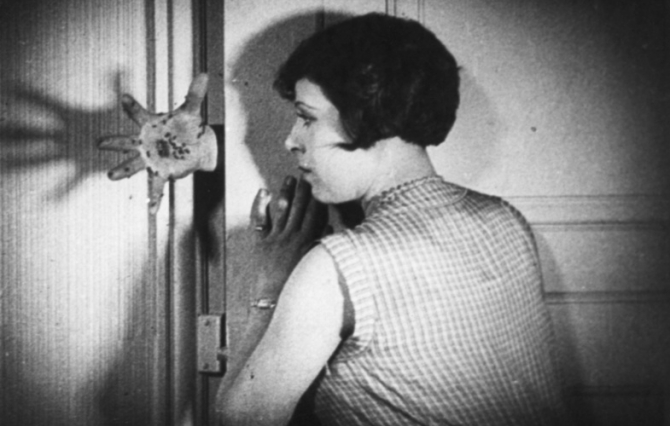
Buñuel is too unique and had too varied for a career for it to be summed up in a single, simple phrase. Even a quick rundown will gloss over big chunks of his ouvre. I'm even guilty of it now: in the previous paragraph I didn't mention his two authentically Surrealist films and a documentary generally accepted as being parcel to his Surrealist phase. Buñuel's early fame arose from those films, to boot: an experimental art-film short by which all others are measured, Un Chien Andalou; the disjointedly episodic L'Age D'Or; and the riotous deadpan document of poverty and misery, Las Hurdes. What makes Buñuel's career so hard to pin down is that the surfaces are deceiving. For instance, it would be natural to assume that the Surrealist films have a lot in common with the High Art masterpieces that bookended his career on the other side. After all, those two sets of films are his most overtly artistic. However, in terms of image composition, editing and rhythm the early Surrealist films and the late French classics couldn't have less in common. With Buñuel, even the basics are convoluted.
A good example: stylistically, his late-French classics actually closely resemble the Mexican entertainments which would seem to be most unrelated to the rest of his career. The late-French films are narratively, philosophically, emotionally and intellectually unhinged, but they are shot, acted and edited like "normal" films; the kind of "normal" films Buñuel produced in Mexico. Again in Mexico, the surfaces are deceiving: faithful adaptations of Robinson Crusoe and Wuthering Heights sound like standard commerical fair... but Buñuel emphasizes the madness and perversion already present in the material - he said he made Crusoe after he became obsessed with the idea of the titular character's sex life. His Mexican poverty row tales like El Bruto and Los Olvidados lean on the violence, grime, deseperation and misery built into their settings - Buñuel uses a typical setting for a commercial Mexican entertainment to present the same material he would when he had artistic carte blanche. Even moreso than the early French Surrealist films, the commercial Mexican films resemble the French High Art classics! This sort of refraction and reflection is present throughout his career: the Surrealism-tinged, Spanish documentary Las Hurdes mirrors the Mexican commercial melodrama Los Olvidados. And the fact-based Simon of the Desert recalls both the "irrational," dream-like Un Chien Andalou as well the fanciful late-French comedy The Milky Way. If I'm belaboring the themes of convolution, misunderstanding and reductiveness, it's only because Buñuel's amazingly varied work has been so repeatedly victimized by a critical mindset that sees him as "the Surrealist who disappeared for a couple decades and then made Belle du Jour."
Of course, not everything about his work is convoluted. Several elements remained consistent throughout his career; most importantly, his sense of humor. This is the trickiest component of Buñuel's personality as an artist to explain. On the one hand, it would seem obvious to describe his humor as "dry" and "black" - jokes revolve around executions, rape and the perversion of religious activity. However, the scenarios and punchlines aren't populist, gallows humor like, say, Hasek's The Good Soldier Schweik. The jokes frequently invoke the specifics of Catholic protocol, obscure Saints, Marxist theory, dream logic and the like, but "high-brow" and "cynical" wouldn't serve as apt descriptors either: his humor is too good-natured and accessible to ascribe to it the bitterness or elitism or rage or haughtiness lurking in those words. When a peasant's first action after being miraculously granted new hands by a Saint is to slap his son up side the head, it's a genuinely shocking and funny and true observation about the all too commonplace parts of the worst humanity has to offer, but Buñuel always makes sure the tone of the joke isn't grim or despairing. Buñuel finds humor in the inevitable selfishness, jealousy, violence and depravity of man, he isn't depressed, he's excited! His best sequences, such as the climatic home invasion of Viridiana,** harness the energy - the joy even - of humanity's basest impulses without taking the teeth out of the danger and violence that goes hand-in-hand. You could argue that his work is powered by a complete suspension of moral judgement, but he's simply too upbeat and naturally curious about human behavior to descend into blank nihilism. As much as his films are packed to the brims with all manner of suicide-inducing observations on our essential awfulness, Buñuel really seems to like all his characters and enjoy their company, even when they are molesting student revolutionaries at gun-point or becoming sexually intrigued by child murderers.
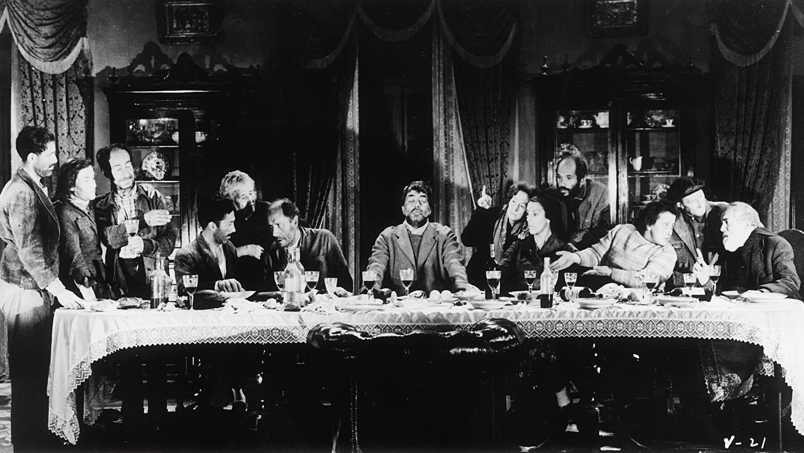
And there's also a consistency in his interests: extreme poverty or privilege, disease, sex, violence, fantasy, Catholic legends & apocrypha, women's shoes and stockings. It's hard to think of a single one of his films that doesn't touch significantly on one of those subjects and most of his films touch on the majority of them. In this sense, it's really not hard to understand how he was able to work easily within Mexico's commerical film industry: most commerical films are little beyond fantasies of sex and violence, all Buñuel had to do was set them in aristocratic households or on poverty row and he was halfway there. In fact, the melodramatic form is conducive to Buñuel's natural tendency towards heightened emotions and characters driven to madness and violence by love and lust and money. Add in Mexico's heavily Catholic culture and the pieces are in totally place for a Buñuelian experience. It seems odd, but one of the most challenging, experimental filmmakers of all time really was at home in Mexico's commerical film industry. In spite of this, Buñuel's initial Mexican period remains his most under-appreciated run. Just to clarify, there needs to be somewhat of a distinction made between these 14 commerical Mexican films made in 1946-1955 and the 5 "Mexican" films made during a period of international productions where he bounced from country to country. It's a career interesting for it's twists and turns - it might be too much to say that the unpredictable life reflect the unpredictable films, but the unique route of Buñuel's career undoubtedly contributed to the unique tenor of his work.
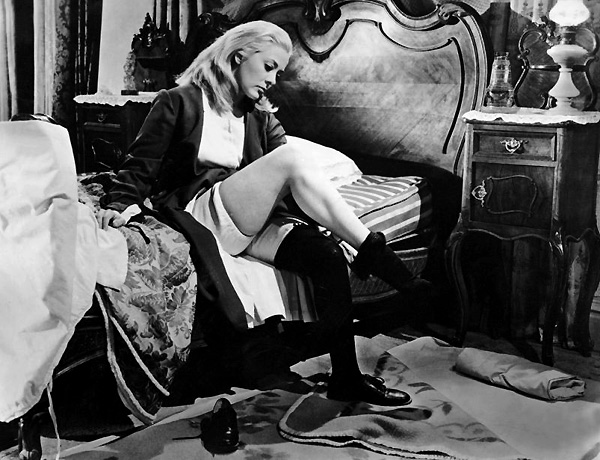
Following the Cannes prize-winning Nazarin, the second of his "other" 5 Mexican films is technically Viridiana, but this is the biggest technicality imaginable: after the artistic success of Nazarin, Buñuel returned to Spain to make another more overtly artistic film. His exile from Spain had always been a mixture of self-imposed and forced: the political climate in the 1930's and 1940's had kept him away from Europe, but he probably could've returned much sooner than he did - he called Mexico his home even when working on French/Italian/Mexican co-productions in the late 50's. His return to his true homeland was predicated on the fact that Franco's censors had signed off of on Viridiana's production; Nazarin's success combined with a certain amount of political cooling-off, the atmosphere was now right more Buñuel to make "his" kind of film again and Spain was unexpectedly willing to host the production. However, the Vatican got word of Viridiana's Catholic-baiting ideas and imagery and demanded that Franco do something - he was all too happy to oblige and had all the prints destroyed except for one which was buried on a farm by the film's producers. In the meantime, Buñuel petitioned the Mexican government to have the film's nationality officially changed to "Mexican" and therefore not subject to Spanish censorship (and able to be distributed internationally and screened at film festivals, etc.) It was a process that took years and before it was resolved, Buñuel had made two more patently Buñuelian films in Mexico (Simon of the Desert, The Exterminating Angel) with Viridiana's producer, Gustavo Alatriste.
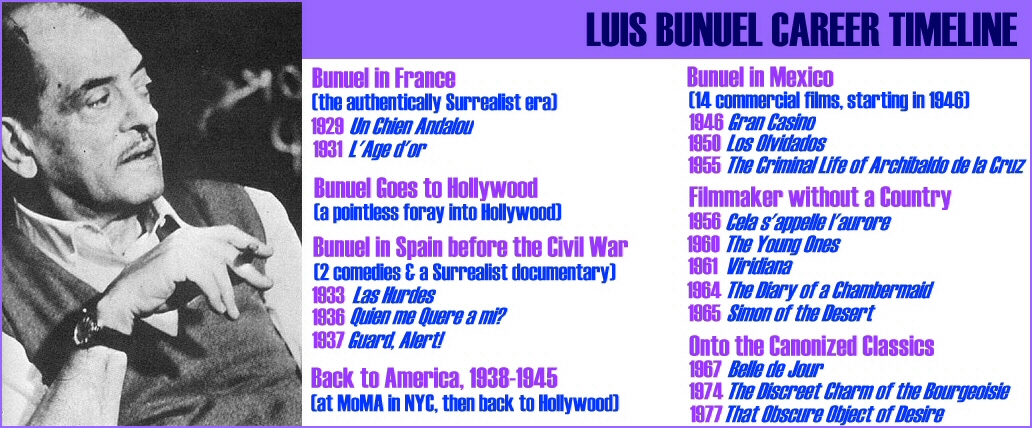
To recap, his career (roughly***) follows: his 3 early bona fide Surrealist films (1929-1933; Un Chien Andalou, L'Age D'Or, Las hurdes), his Mexican commerical phase (1946-1955; Los Olvidados, El, Robinson Crusoe), his "man without a country" era (1956-1965; Viridiana, Death in the Garden, The Diary of a Chambermaid), his High Art canonized masterpiece period (1967-1977; 7 films including Belle de Jour, The Discreet Charm of the Bourgeoisie, Tristana.) Interestingly, his commerical Mexican period is of equal length (and more significant output) to another other era, but it remains his most over-looked. Even adventurous Buñuel fans probably know very little about Gran Casino or Mexican Bus Ride - the list of films from that era mainly includes works that have enjoyed very little critical championing or any kind of revival push. There's no Criterion Collection edition of Illusion Travels by Streetcar and no week run at Film Forum of a new print of The River and Death, even though both films are as worthy as The Milky Way or That Obscure Object of Desire. The reasons for the second-class status of the commerical Mexican films are too wide-ranging and debatable to go into for now, but I would argue that many films from that era are as good as anything he ever produced and that at very least it contains many, many under-appreciated gems. Which brings us to...
THE CRIMINAL LIFE OF ARCHIBALDO DE LA CRUZ
When I decided to do a Buñuel film for this series, I assumed that because his commercial Mexican films are so unknown and I had seen most of them, that it would be easy to pick one that wasn't available on dvd or through netflix and write about it. Surprisingly, even deservedly forgotten titles like Susanna and Gran Casino had enjoyed some kind of home-viewing release, even if they were exceptionally cruddy transfers from budget companies that specialize in crapping out vaguely notable titles that happen to have easy to obtain or public domain rights. For instance, my dvd of El Brute broke after exactly one and a half viewings. Nothing happened to the disc, it just froze up and then failed to play ever again. Anyway, the somehwat easy access (several of them are available only as part of box-sets, so "somewhat") of the commerical Mexican titles makes their obscurity even more surprising - if anything, it sealed the deal on me writing about them. The only title that met the criteria for the series that I had seen was 1955's The Criminal Life of Archibadlo de la Cruz and, fortunately, it's exactly the kind of over-looked gem that popped up throughout Buñuel's time in Mexico.
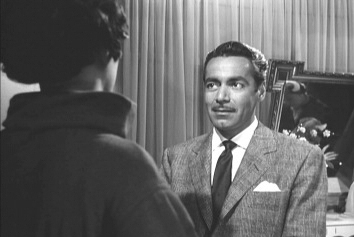
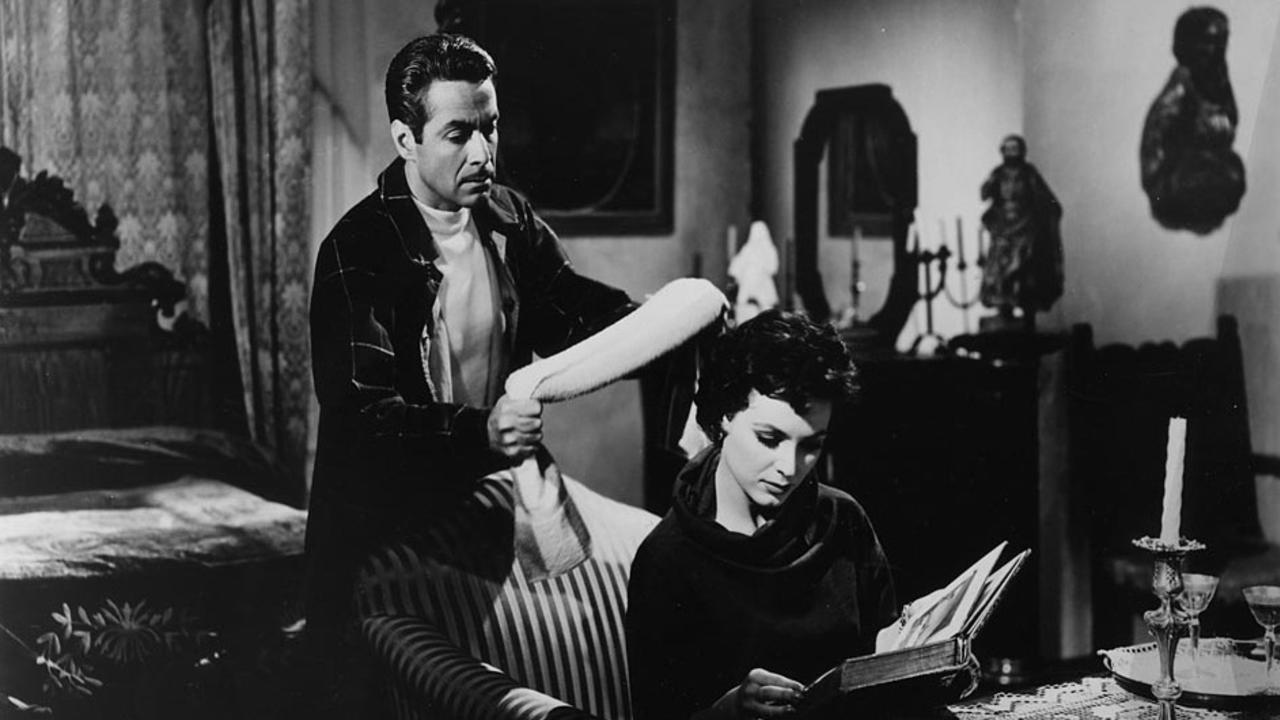
The original Mexican title, Ensayo de en Crimen, translate as "Practice of the Crime" and that's pretty much an on-the-nose description of the film: a wealthy businessman decides to kill his fiancee and spends most of the movie practicing his various plans for the crime. As grim as that description sounds, Buñuel easily lays the melodramatic foundation and builds it into an almost good-natured black comedy, one driven by an all-consuming lust. The character of Archibaldo de la Cruz is played by an ingratiatingly aloof Ernesto Alonso, a producer/director/actor and the grandfather of the Telenovelas which dominate Spanish-language television to this day. An actor whose masculine charm and suave good-looks would've been right at home in Hollywood, Alonso knows the film hinges on finding him likable as a performer in spite of virtually every aspect of his character and strikes the right balance between "psychotic enough to spend all day fantasizing about murder" and "charming enough that we're never rooting against him." As far as the "commercial" aspects of a film from his "commercial Mexican phase" go, this one is out there. But again, the melodramatic form from which it is starting readily invites sex, violence and heightened emotions - add in a soap opera impresario and that's certainly a better commercial prospect that say, Sandra Bullock as a badass detective taking on a pair of Leopold and Loeb like teens. Anyhoo, I do want to write about the idiosyncrasy of this film in the context of his Mexican work, but let's get to the film itself first - with The Criminal Life, the beginning is a great place to begin.
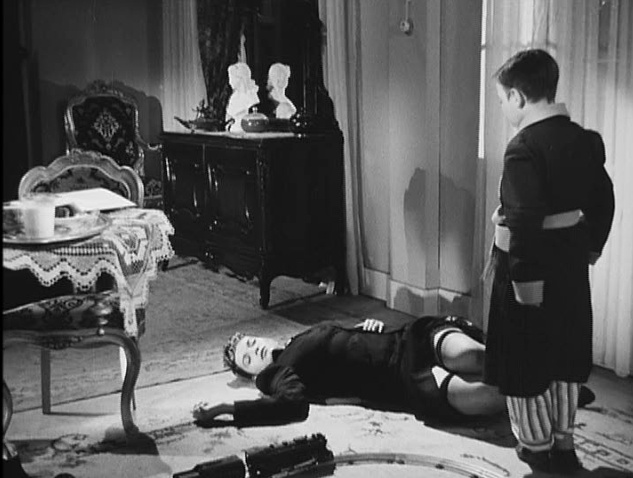
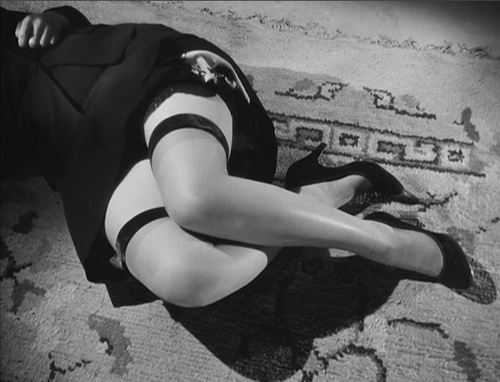
The introductory scene has to rank among Buñuel's greatest individual scenes - of course, that doesn't mean the rest of the film is on the same level, but the opening is absolutely classic, top-tier Buñuel. De la Cruz, as a young boy, listens to his beautiful nanny talk superstitious, fairy tale-ish nonsense about the family music box and its eerie ability to induce the listeners of its tune to murder. Just then, a bullet shatters the window and strikes her dead. A stray shot from a poltical insurrection has killed her instantly and her lifeless body slumps to the floor, her skirt hiking up as she falls to reveal the top of her black silk stockings, her lace garters and her shapely alabaster thighs. From that moment forward, in De la Cruz a deep and unsettling connection is cauterized between the tune of the music box and lust and violent death. The moment reminded me of Anna Magnani's murder in Open City, which has always seemed to me strangely erotic: it's effectiveness as tragedy is weirdly undercut by the fact that her alluring stockings are revealed just as she collapses to the ground. Furthermore, my reaction is especially mixed since I, as an audience member, know that this is only an actress pretending to be dead, but the thighs and stockings on display are as real as any piece of pornography. Buñuel plays on the same tensions in cinematic device, but I'm sure he would take it even one step farther and maintain that in reality during a war, eroticism still has the ability to overwhelm the human mind and that violence and sex get all tangled up even when decorum emphatically states that they not supposed to.
The rest of the film is structured around a framing device following De la Cruz's attempts to convince a judge that he should be put away for murder. You see, by happenstance, as a middle-aged man, De la Cruz came across the music box in an antique shop. Upon hearing its tune, the powerful memories of his youthful experience possessed him: with the music box's song, his mind was submerged in an implaccable desire to once again feel that same obliterating rush and he became obsessed with a plan to decisively bring together sex and violence and relive that overwhelming youthful feeling. The die was cast: he would murder the beautiful young woman he is set to marry. Every time he heard the music box, his passion was ramped up and before long he was making preparations, deciding on a strategy and then beginning his practice for the crime. Now that his fiancée has been murdered, he begs the judge to put him away for life. From this frame, the film flashes-back to specific episodes as De la Cruz tells his story. For once, a flash-back framing device serves a purpose: it introduces to De la Cruz at his most repentant and shows that lurking inside him is at least some shred of human decency. It's pretty flimsy, but a semblence of humanity is necessary for the film to work: De la Cruz appearing before the judge of his own volition and begging for his (and our) mercy gives Buñuel the tiniest bit of leeway with the character. That leeway forms the base on which Buñuel and Alonso can build the tone of the film: without it, the humor would (at best) be the type of nihilistic, mean-spirited comedy which Buñuel always managed to eschew. Presented as flashbacks from the courthouse, the specific episodes can slyly avoid moral tension: an audience needn't worry that De la Cruz will face justice and, beyond that, he's a decent enough human being to see his sickness and demand the justice himself. The episodes can then themselves have a level of moral elasticity rare for a commercial feature.
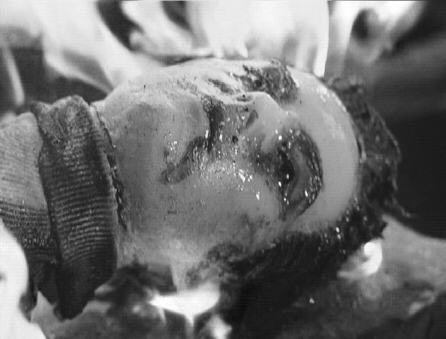
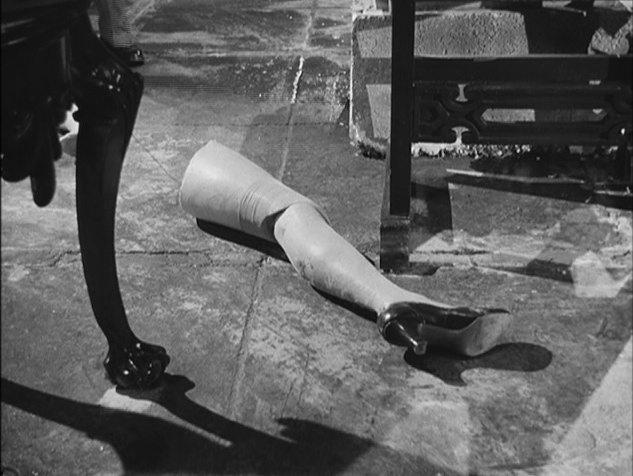
I wrote in reference to Viridiana, "his best sequences harness the energy - the joy even - of humanity's basest impulses without taking the teeth out of the danger and violence that goes hand-in-hand" and the best sequence of Archibaldo is the inversion of that: a comedic, even silly scene, that ends up sickening and disturbing. At one point, De la Cruz buys a mannequin and dresses it up as his financée. From there he practices the crime, "strangles" the plastic figure with a ligature, dismembers the corpse and finally incinerates the body in his pottery oven. The scene is an amazing bit of deadpan humor with the ridiculous scenario played entirely straight: committing extravagant violence against a piece of furniture is treated as deadly serious. The whole sequence is constructed by Buñuel to resemble any number of similar sequences in thrillers like Dial 'M' for Murder or Diabolique that generate tension by playing off the audience's natural tendency to root for the protagonist to suceed set against the fact that those protagonists are doing something awful. As silly as the sequence first appears, Buñuel is just getting started. By the end, when we witness the mannequin's face slowly melting and think of De la Cruz's desire to the same to his unsuspecting fiancée, there is something undeniably upsetting about the violence despite the fact that the it was committed against a mannequin. It's scene that is hard to imagine any other director attempting, let alone pulling off. Buñuel takes the teeth out of murder and somehow makes it more disturbing.
On the whole, The Criminal Life of Archibaldo de la Cruz probably doesn't reach the level of Buñuel's greatest films. A too-pat, goofy ending most prominently trips up the film: it turns out De la Cruz didn't commit the murder of his fiancée after all, a jealous ex-boyfriend did the deed. He throws the music box in a lake and strolls off with a lovely young woman, a tour-guide/model briefly introduced earlier in the film. The tone of this whole conclusion is a bit too "nah, just kidding folks" to make the film a classic and it really does end up undercutting everything that came before. If you were inclined to criticism of his commercial Mexican phase, it would be logical to point to the ending as something forced on the film and he faced limitations in his stylistic/narrative choices. However, I have disagreement with both notions: 1) Buñuel frequently displayed a tendency to pat, ironic endings: Diary of a Chambermaid and Viridiana both use their final scenes to pointedly force the audience revise their thoughts on the preceding material. Exterminating Angel goes the opposite route and hammers home the point he had been making all along in as pat and goofy a scene as you can get. That it works great in those films, but stinks in The Criminal Life makes me feel less like the ending of The Criminal Life was forced on him and more like he just botched it - the tendency towards that sort of ending definitely exists in Buñuel. 2) The Criminal Life is very dissimilar from his other commercial Mexican films. Coming at the end of that era, this film definitely takes more chances and presents stranger subject matter in a more typically "Buñuelian" fashion that about any other one of his commercial Mexican films. The films of Buñuel's which it most closely resembles is That Obscure Object of Desire, the director's final work before his death. Both are deadpan comedies about a man consumed by a violent lust and the woman in the sights of his passion. Both films stick to a more or less standard narrative (in comparison to, say, the narratively meandering The Phantom of Liberty or the "irrational" narrative of Un Chien Andalou), with a single story couched in a flashback frame.
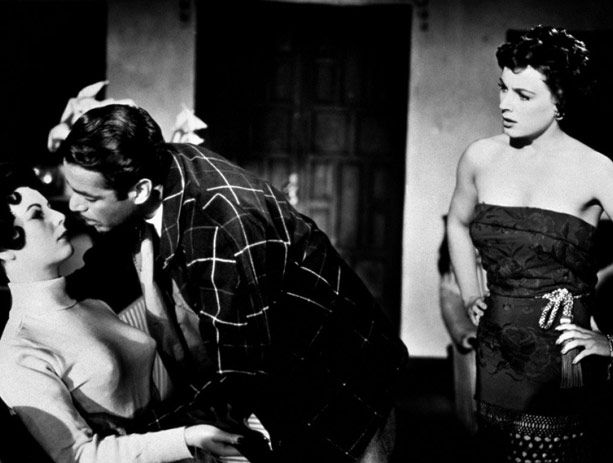
In this light, it's even stranger that The Criminal Life of Archibaldo de la Cruz is one of the few Buñuel films totally unavailable on a Region 1 disc. The comparisons to That Obscure Object of Desire, even in terms of overall quality, are favorable. It's the first work that points decisively to who he would become as an artist later on in the most esteemed part of his career and it has one or two scenes that deserve a place alongside his most famous. I personally think the nanny's death and the mannequin homicide as unforgettable as the toilets at the dinner table in Phantom of Liberty or the sursiks in Discreet Charm or the double-actresses in Obscure Object. It's certainly one of the films where his ideas about sex, violence, passion, emotion and perversion are most clearly on display. And I prefer it to Los Olvidados, the most celebrated of Buñuel's commercial Mexican films, one that I think is over-rated by European and American critics' and their long-standing love affair with Latin and South American poverty. For a supposedly commercial film, The Criminal Life of Archibaldo de la Cruz is a deeply strange film, comparable as a psychological portrait to Belle du Jour, Diary of a Chambermaid and Viridiana. That's a long-winded way of writing: The Criminal Life is not a flawless masterpiece, but it can easily withstand comparison to Buñuel's best.
Strangely, its reputation seems to have waned in recent years: both Francois Truffuat and Jean-Luc Godard cited it as one of the Ten Best Films of 1957 - you would think their enthusiasm for it alone would be enough to have ensured it minor cult status. Their 1957 lists also include many films that they more or less canonized through their vocal and impassioned championing: Nicholas Ray's Bitter Victory and Bigger than Life, Frank Tashlin's Will Succes Spoil Rock Hunter? and Hollywood or Bust, Alfred Hitchcock's The Wrong Man and Elia Kazan's A Face in the Crowd. Of all the films on their respective lists, The Criminal Life stands out for being the least well known film by a very well known director - and, interestingly, it's exactly the same kind of second-tier work like Bigger than Life, A Face in the Crowd or The Wrong Man**** that those New Wavers specialized in, through the sheer force of their will, manuevering to "consensus classic" status. All of this just confirms my sense that it's notably strange that The Criminal Life is not a more well-regarded film. In fact, it was very well-recieved by the New York Times' Vincent Canby ("the only about town which I can say that it mustn't be missed") upon its U.S. theatrical premiere... 22 years after it was made. Canby goes so far as to cite it as the turning point in Buñuel's career and compares it favorably to Tristana and The Phantom of Liberty. That 1977 U.S. release of the film coincided with the height of Buñuel's esteem and relevance - it preceded the New York Film Festival premiere of Bunuel's final film, That Obscure Object of Desire, by just over a month, in the midst of the creative run that saw him drawing critical raves and awards for film after film - which, if anything, makes Canby's unwillingness to dismiss the film as a minor work all the more compelling.
To call in heavy hitters like Truffaut, Godard and the New York Times to bolster my point of view might seem a little excessive, but really I would hate that my enthusiasm for Buñuel in general to undermine the validity of my assessment that The Criminal Life of Archbaldo de la Cruz is in fact a pretty darn good film and definitely worth seeking out. If my perspective is too much that of an unrepentant Buñuel fanatic, then I at least have other hugely credible witnesses in my corner. Of course, they could have their point of view skewed by Calandian fanaticism, but the problem is yours if you can't see how enchantingly unique and remarkable even a minor work from the Spanish Surrealist truly is. An unjustly neglected film from one of cinema's all-time greats: that's exactly what I was hoping to highlight in this series.
~ 2009 ~
* The exception in the "Onto the Canonized Classics" period is the Spanish-produced Tristana. That film still stars Catherina Deneuve, so even then there's a strong French element.
** I watch a lot of Telefutura's version of TMZ with my wife and we just saw a big special on Silvia Pinal (the star of Viridiana) and all her lovers and all the various kids she had with all these lovers. She's still a huge star in Latin America and most of her children are public personalities in the Frank Stallone/Paris Hilton mode of "only famous because of their family." They are also in the same mold because they are mostly "complete public embarrassments." Anyway, quite awesomely, Pinal named one of her daughters "Viridiana" and the special had to stop and talk about the movie for a bit to explain not only the name, but why it meant so much to Pinal. It was great: a Viridiana/Bunuel mini-primer jammed in the middle of a TMZ gossip show.
*** There are a couple loose ends here, like the 2 Spanish comedies he produced in the early 30's that aren't really Surrealist works. He made them after he came back from America but before he left for Mexico. Additionally, Las Hurdes was made around the same time those 2 films - so it was made in Spain after his official association with the Surrealists had ended, but it's hard not to think of it as one of his Surrealist works. Also, he was dividing his time between Spain and France, with a sizable side jaunt to Hollywood. He even made to films that he considered to be "American" (his quotes): The Young Ones & Robinson Crusoe. Confused? Check the timeline up top...
**** I don't mean this in a derogatory way; just that these films are not A Rebel without a Cause, On the Waterfront or Rear Window.